Punta del Este, year-round: why more and more people are staying to live in Maldonado
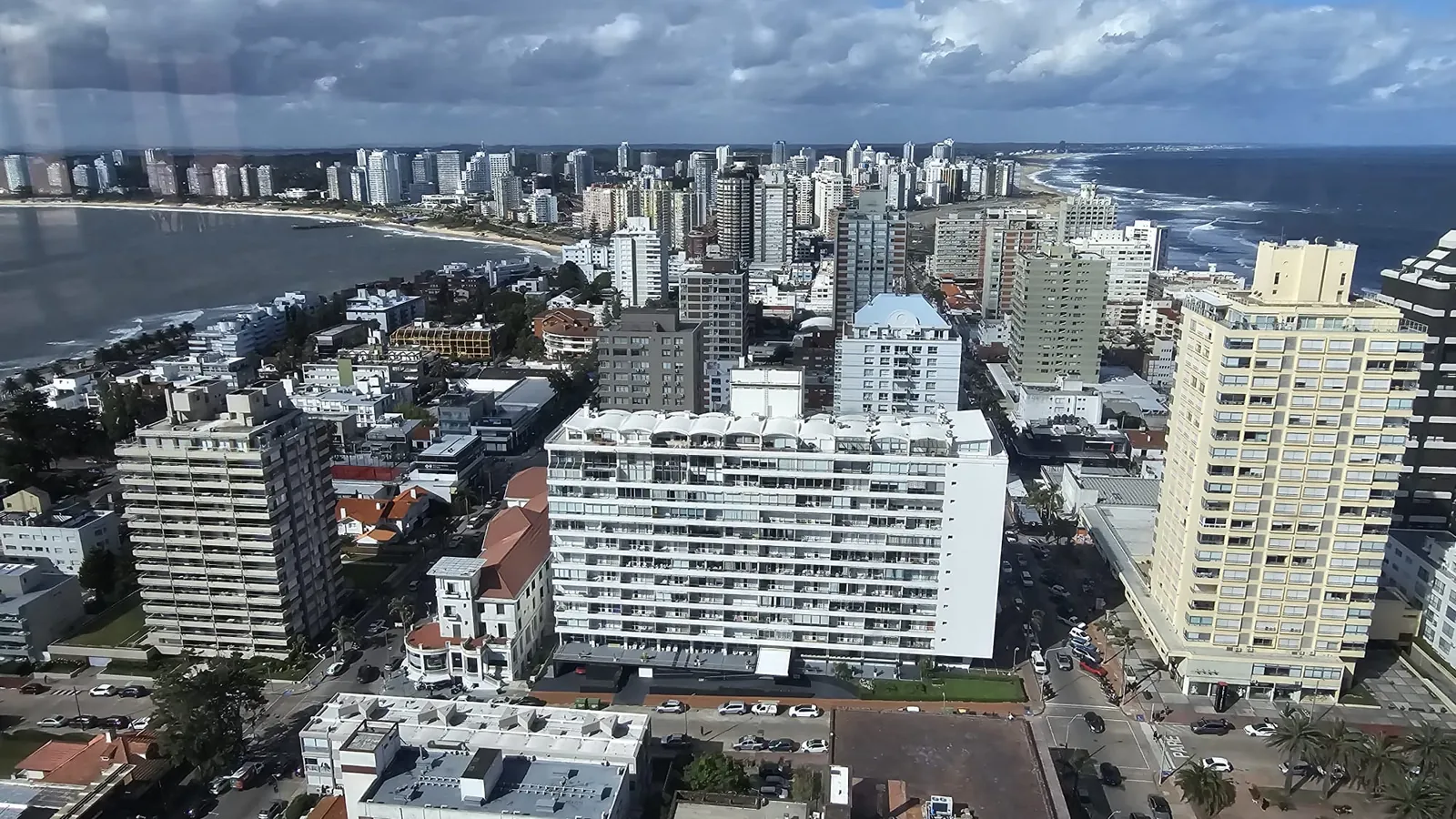
Photo: Ricardo Figueredo / Archivo El País
For decades, Punta del Este was synonymous with vacation: packed beaches in January and a city that slowed down the rest of the year. That picture is changing. More and more Uruguayans and foreigners are choosing to settle in Maldonado for all twelve months, drawn by the search for quality of life, remote work, and a real-estate offering that is beginning to adapt to those who stay. That is how a report published by El País on November 22, 2026, describes it, gathering the views of developers and operators in the department.
From the season to everyday life
According to the report, the phenomenon gained momentum after the pandemic and is visible on the street today. Javier Sena, president of the Cámara Inmobiliaria de Maldonado/Punta del Este (the Maldonado/Punta del Este Real Estate Chamber), explained that the flow of vehicles and people remains high even outside the tourist season, and that among the new residents there are families who relocate for work, people who work remotely, and older adults looking for a quieter life. Uruguayans predominate, followed by Argentines and by residents of other countries. "Here we see someone speaking German or English, and that practically never happened during the winter before," he said.
On the developers' side, Santiago Tarasido, president and CEO of the construction company Criba, put it this way: in Maldonado, "the traditional summer second home is beginning to coexist with a model of use that extends much more throughout the year." For him, it is a cultural shift: workplace flexibility and a greater appreciation of the natural surroundings are changing the idea of the vacation home.
This is not an isolated intuition. Architect Nicolás Rudolph had already made the point in an opinion column published by Infobae on October 20, 2026: for years, Punta del Este built housing, dining, and services at the scale of a city much larger than its permanent population, and that infrastructure, already in place, is the foundation of a different stage. "Part of that future city arrived before its inhabitants," he wrote.
What the official figures show
Figures from the Instituto Nacional de Estadística (INE, Uruguay's National Institute of Statistics) show Maldonado as one of the country's most active markets. In September 2026, the department accounted for 18.30% of the 4,804 property sales recorded nationwide. It ranked second, behind only Montevideo (35.43%) and ahead of Canelones (13.07%). A forthcoming article in this Magazine will examine in detail the latest INE bulletin on property sales.
Renting year-round, increasingly difficult
The other side of this trend is rental housing. Those who arrive to stay often start by renting, and that is where the bottleneck appears. "There is very little housing available to rent, really very little," Sena told El País. As he explained, demand comes from very different profiles: workers who relocate to the department, students from the interior who are pursuing university degrees in Maldonado, and also seasonal workers looking for lodging that matches their income.
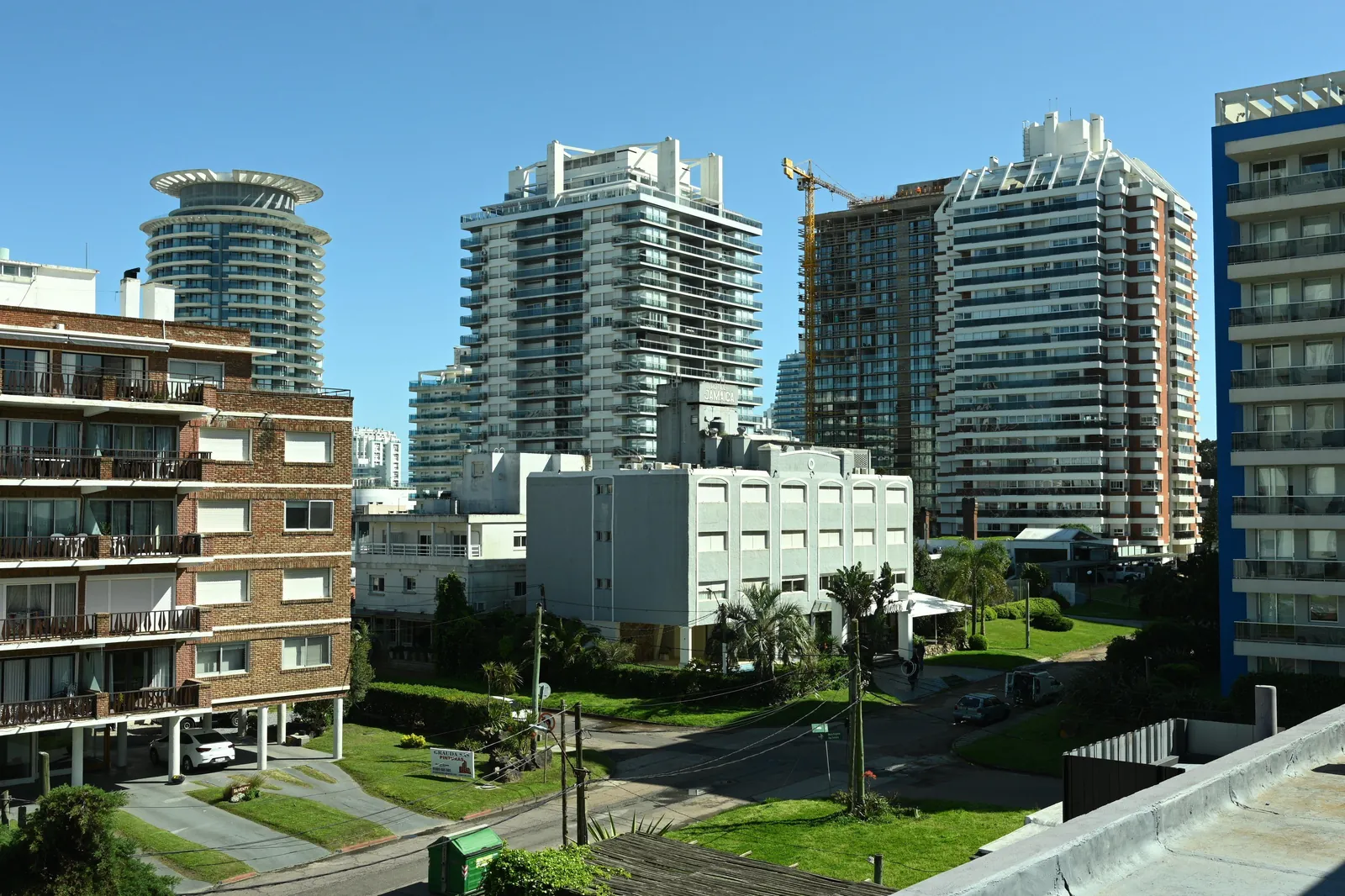
Buildings in Punta del Este. Photo: Ricardo Figueredo / Archivo El País
In the high end, the shortage is even more pronounced. "There are many people asking for year-round rentals of premium properties, and those rentals are in short supply," Alejandra Covello, director of Covello Propiedades, told the same newspaper. The reason is easy to understand from the figures she herself cited: a premium one-bedroom unit can start at around USD 1,200 or USD 1,300 a month on an annual contract, while a two-week stay in high season can run around USD 5,000. With that gap, many owners prefer to hold their units for the summer, and the twelve-month contract takes second place.
Buying instead of renting
For someone who has already decided to live in Punta del Este, depending on a year-round rental market with so little supply means uncertainty: few options to choose from, renewals that are hard to anticipate, and the possibility of having to move when the season arrives. That is why more and more people are considering buying from the outset.
The supply is keeping pace with proposals for different profiles. As Covello explained to El País, alongside the large towers on the waterfront, with hotel-like services, smaller-scale projects are appearing, about 300 meters from the rambla, with three- or four-story buildings and more limited amenities. In that segment, prices generally range from USD 250,000 to USD 350,000 for one-, two-, and, in some cases, three-bedroom apartments, and they attract younger buyers looking for their first home in the department.
What to look at if you buy to live year-round
A house designed for January does not always work in July. In our experience, these are some of the questions worth asking before you decide:
Everyday services. How close are the school, the health center, the supermarket, and the shops that stay open year-round, not only in season.
Connectivity. The quality of the internet connection in the building or the area, and the real travel times to the Ruta Interbalnearia, Montevideo, and Laguna del Sauce airport.
The area off-season. Whether the neighborhood has year-round neighbors and a life in winter. For everyday living, areas such as the Avenida Roosevelt corridor and the surroundings of Punta Shopping carry more weight, according to an Ámbito article of October 6, 2026; in the higher end, the ocean view remains decisive.
The building in winter. Orientation, insulation, heating, and wind protection, and how the services and common areas operate and are maintained all twelve months.
Common charges. A building with many amenities is a great advantage if you use them year-round; it is worth knowing the monthly cost before you buy.
A place to work. A space with natural light and a good connection is no longer a detail.
Tarasido put it in a sentence that many of those who move to the coast would share: "Luxury is not always about having more. Often it is about having less: less noise, less density, and fewer worries."
What lies ahead
For 2027, Sena expects a scenario of stability, with activity levels similar to this year's, and he highlighted the opening of new shops and shopping centers that can create jobs and support the growth of the resident population. All signs point to Punta del Este continuing to add residents who do not leave in March.
If you are considering settling in Punta del Este or its surroundings, at Blk. Realty we will help you find a home designed for year-round living. And if you want to see asking prices per square meter in the area, we recommend our article on the GREI Index.
Blk. Realty · Uruguay
Sources
El País (Lautaro Brum), "El cambio en Punta del Este que dejó sin alquileres anuales a las torres de lujo y disparó los precios", November 22, 2026: https://www.elpais.com.uy/negocios/noticias/el-cambio-en-punta-del-este-que-dejo-sin-alquileres-anuales-a-las-torres-de-lujo-y-disparo-los-precios
INE, Indicadores de Actividad Inmobiliaria (IAI), Mercado de Compraventa, August–September 2026: https://www5.ine.gub.uy/documents/Estad%C3%ADsticasecon%C3%B3micas/HTML/IAI/Compraventa/2026/Compraventa_Setiembre_2026.html
Infobae, opinion column by Nicolás Rudolph, October 20, 2026: https://www.infobae.com/opinion/2026/10/20/punta-del-este-de-destino-turistico-a-ciudad-permanente/
Ámbito, October 6, 2026: https://www.ambito.com/uruguay/punta-del-este-se-afirma-como-plaza-residencial-todo-el-ano-y-los-valores-del-metro-cuadrado-estrenar-rozan-los-us-9000-n6330880